Recruiting Without Contingency Fees: How Acoustic Hired 5 Sales and Marketing Roles and Saved 45%
Earlier this year, Acoustic had big hiring goals across Sales and Marketing.
What they didn’t have was enough internal recruiting capacity to get there.
Gabrielle Sirner-Cohen, Chief People Officer at Acoustic, knew our work from a previous Atlanta-based software company. So when her team was facing an ambitious hiring plan with limited recruiting capacity, she reached out.
This is one of the most common situations we see at Estes Group. A company knows exactly who it needs to hire. The budget is approved and the hiring managers are ready. But the recruiting team that would normally handle this is already stretched thin.
So the roles sit open or as pending until recruiter capacity opens up. Or the company turns to contingency agencies and pays a large fee for every hire.
Acoustic chose a different path. They brought in an embedded recruiter. This post walks through what that looked like, what came out of it, and how to know if Embedded Recruiting is the right solution for your team.
The Challenge: Big GTM Hiring Goals and a Recruiting Team at Capacity
Acoustic needed to hire several roles across both Sales and Marketing at the same time. The roles ranged from an entry-level SDR to a Director-level marketing leader.
The mix of skill sets and required sourcing time needed for success made this challenging.
Hiring for different teams means running different searches in parallel, quickly switching context, and partnering closely with several stakeholders. A strong Senior Account Executive candidate and an experienced Director of Brand and Content have almost nothing in common when it comes to previous experience and job requirements. Each role needs its own sourcing plan, its own interviewing approach, and its own read on what “great” looks like.
When a recruiting team is already at capacity, a hiring push like this usually ends one of two ways:
- Searches move slowly, and the hiring plan falls behind- for sales this has a direct impact on meeting revenue targets for the quarter and/or year
- The company leans on contingency agencies, and recruiting costs climb fast
Neither is a great outcome. Slow hiring means missed pipeline and overworked teams. High agency fees lead to a tighter budget for other recruiting related items like technology and tooling.
The Approach: An Embedded Recruiter Who Worked Like a Teammate
Senior Recruiter, Erin, joined Acoustic as an Embedded Recruiter. She quickly onboarded and was up to speed on the company history, culture, interview process, and hiring bar within 1.5 weeks.
Embedded Recruiting means a member of our team works inside your company as your in-house recruiter on a part-time or full-time basis. They use your systems like Applicant Tracking Systems, slack, email, and sourcing tools like LinkedIn. They join recurring meetings and work directly with your hiring managers. To candidates, they represent your company as an employee not a third-party recruiting agency.
Erin partnered closely with Acoustic’s Head of Sales and Marketing, having a formal weekly check-in in addition to daily back and forth about candidate profiles, interview feedback, and everything that keeps a search moving forward. That direct partnership with a Hiring Manager is the key to success. We believe the best hires happen with a recruiter and hiring manager are operating like an actual team and are truly aligned on what great looks like. A recruiter understands the business goals of their hiring manager and is able to connect the dots on what it will actually take to succeed in the role. A recruiter also understands the impact each hire will have on a business. You can only understand this by operating from the inside of a company, not as an outside vendor.
An agency working from the outside rarely gets the right level of access and context. An Embedded Recruiter gets it by default, because they are part of the team.
That is what made this partnership work. Erin learned Acoustic’s culture and what success looked like there, and she used that to find people who would thrive, not just people who matched a list of requirements.
The Results: 5 Key Hires in 3.5 Months
Fast forward 3.5 months, and together we filled 5 key roles across Sales and Marketing:
Roles included everything from a Sales Development Representative to a Director of Brand and Content Marketing.
Compared to what Acoustic would have paid in contingency fees for the same hires, they saved 45% on their recruiting costs.
In Their Words
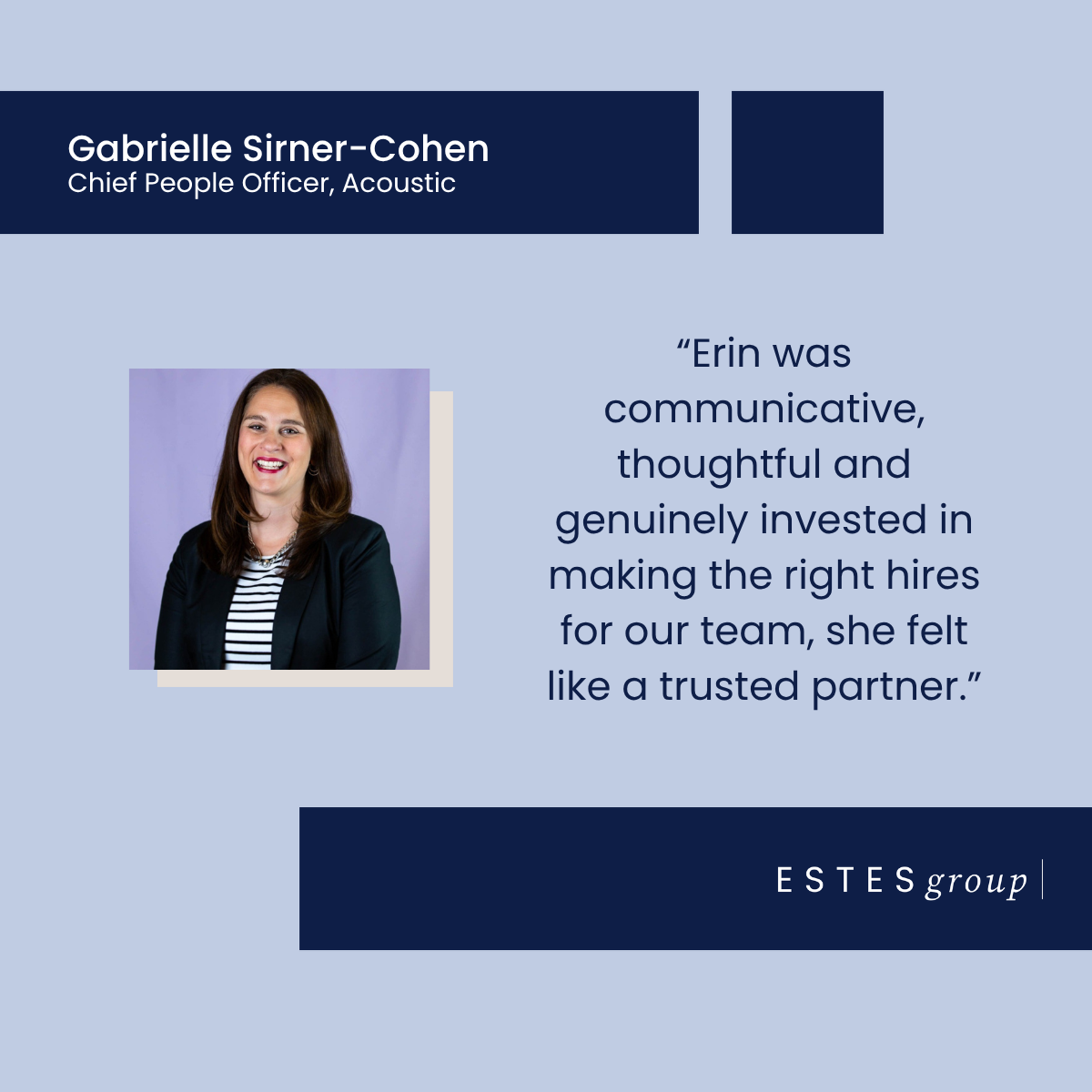
Here is what their Chief People Officer at Acoustic, shared about the partnership:
“Our team at Acoustic partnered with Estes Group and their recruiter, Erin, for 3.5 months. Working with Erin and Estes Group was a great experience and their embedded recruiting model helped us quickly hire 5 key roles across GTM and Marketing when we had limited internal recruiting capacity. Erin worked closely with our Head of Sales and Marketing, operating like an internal team member who understood our culture and what it takes to be successful here. Erin was communicative, thoughtful, and genuinely invested in making the right hires for our team, she felt like a trusted partner.”
“Trusted partner” is the whole goal. It is why we built Estes Group the way we did.
Why Recruiting Without Contingency Fees Worked Here
Contingency recruiting has its place. For a single hard-to-fill role, it can be the right call.
But when a company needs several hires in a short window, the math changes. With a contingency agency, you pay a separate fee for every person hired. Five hires means five fees.
With Embedded Recruiting, you are paying for a recruiter’s time and expertise on your team. That same recruiter can run multiple searches at once, so the cost is spread across every hire they make.
There are a few other differences worth knowing:
- One point of contact. Instead of juggling several agencies, hiring managers work with one recruiter who knows the company.
- Better candidate experience. Candidates hear from someone who represents your company directly.
- Process improvements stick around. An embedded recruiter often helps tighten interview plans and intake processes along the way. Those improvements stay after the engagement ends.
Is Embedded Recruiting Right for Your Team?
I will be honest. Embedded Recruiting is not the right fit for every company.
If you are only making a handful of hires per year, a contingency search for one key role may make more sense. Embedded Recruiting usually fits best when a company has roughly ten or more hires on its plan for the year, or a busy season where several roles need to close at once.
It tends to be a strong fit when:
- Your recruiting team is at capacity and can’t take on more searches.
- You don’t have an internal recruiter yet, and leaders are running hiring on their own.
- You need to hire across several teams or functions at the same time.
- You want recruiting support that feels like part of your team, not a vendor.
Acoustic checked several of these boxes. They had multiple GTM and marketing roles to fill, limited internal capacity, and hiring leaders who wanted a true partner in the process.
Frequently Asked Questions
What are the benefits of embedded recruiting for high-growth startups in the US?
Embedded recruiting gives high-growth startups in-house recruiting capacity without a full-time hire. The recruiter works inside your team, learns your culture, and runs multiple searches at once. This often lowers total recruiting costs compared to paying a contingency fee for each hire, while improving the candidate experience and hiring process.
How do you hire go-to-market talent for a startup in the US?
Start with a clear intake conversation with the hiring leader about what success looks like in the role. Build a sourcing plan for each role, since sales, marketing, and customer-facing roles attract different candidates. Use a consistent interview plan so every candidate is measured the same way. Many startups bring in an embedded recruiter to run these searches when internal capacity is limited.
What is the difference between embedded recruiting and contingent recruiting?
Contingent recruiters work outside your company and are paid a fee for each hire they make. Embedded recruiters work inside your company as part of your team, usually on a fractional or part-time basis, and are paid for their time. For companies making several hires, embedded recruiting is often more cost-effective and gives the recruiter deeper knowledge of your culture.
What should I do when my recruiting team is at capacity?
First, look at your hiring plan and decide which roles are most urgent. If you have several roles to fill in a short window, consider adding embedded recruiting support. An embedded recruiter can join your team quickly, use your existing systems, and take full searches off your team’s plate.
If you’re ready to learn more, please reach out to Estes Group. We would love to support your hiring plans!